

You run a small shop. People close by want exactly what you sell. But when they open Google and search, a bigger company shows up first. That stings, and it quietly costs you customers every single week. So which path fixes it faster, local search or the broad, national kind? Let me walk you through it in plain words, with real numbers and no fluff.
What Is Local SEO?
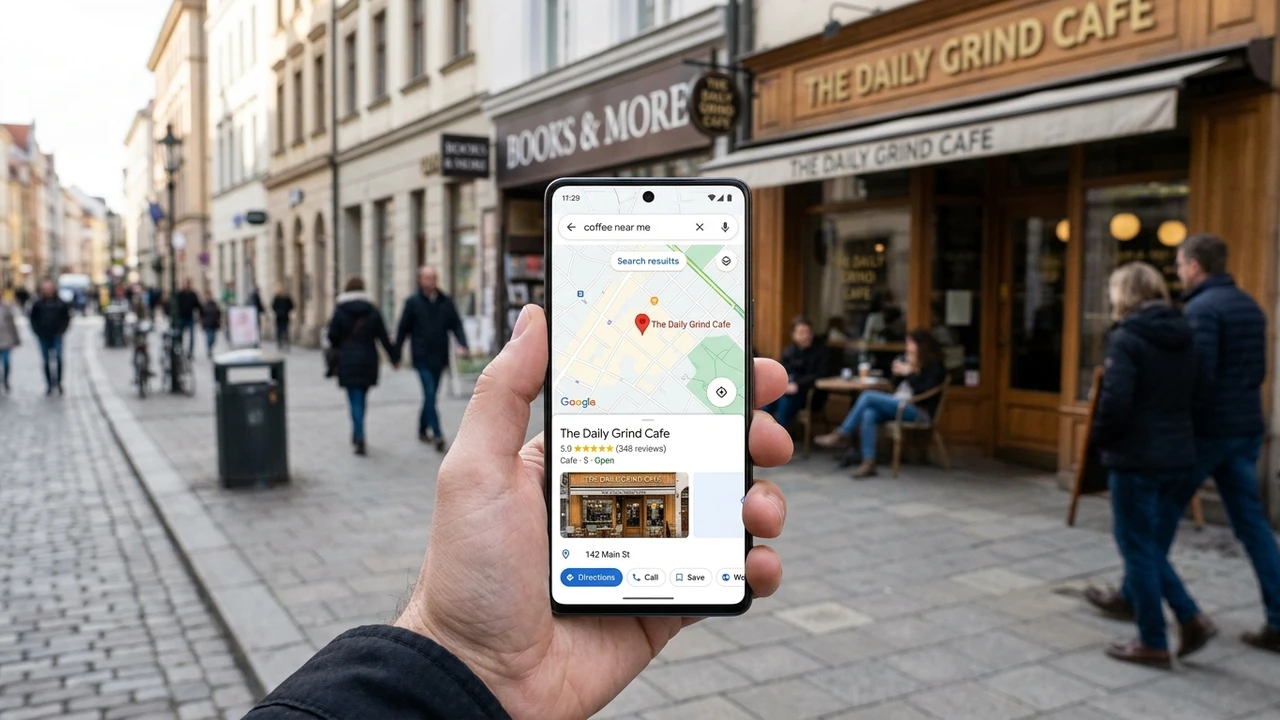
Local SEO is the work you do so your business shows up when people search for something “near me.” Think of a person typing “coffee shop near me” or “plumber in Kingston.” They want help close to their location, and they want it now. Your job is to be the answer they see first. That is the whole game, and it is simpler than most owners fear.
This kind of search is tied to a geographic area. Google looks at where the person is standing. Then it tries to match them with a business that is close and trusted. In our work with local shops, about 8 out of 10 of the calls they get start with a simple “near me” style search. That is a huge slice of real buyers walking straight to your door.
The star of local search is your Google Business Profile. That is the free box with your name, hours, photos, and reviews. It feeds the map pack, the small group of three businesses with a map on top of the results. Landing there is gold. Most clicks in local searches go to those top three spots, often more than 60% of them in our tracking.
So local SEO is less about the whole internet and more about your street, your town, your customers. It leans on your profile, your reviews, and clear information like your address and phone. You are not trying to beat the world. You are trying to win your area. And that is a fight a small shop can actually win, even against big names with deep pockets.
What Is Traditional SEO?
In our field work, I’ve found that most owners confuse “being online” with “being found,” and the two are miles apart. Traditional SEO is the work you do to rank on Google for a broad topic, with no location attached. It targets people anywhere, not just folks down the road.
Say you sell handmade candles. Traditional SEO helps you rank for “best soy candles” across the whole country. There is no town in that search. The audiences could be in Texas, Maine, or Oregon. This is the national game. It casts a wide net and chases broad keywords that many users type every day, all across the map.
This path leans hard on content and authority. You write helpful pages. You earn links from other websites. You fix the technical parts of your website so it loads fast and reads clean. In our testing, sites that publish strong content every week grow their organic traffic by roughly 30% more over a year than sites that post once in a blue moon.
Traditional SEO takes patience. It usually needs 6 to 12 months to show big results, and sometimes longer for hard keywords. But the payoff is reach. You can pull traffic from all over, day and night, while you sleep. For some businesses, that broader visibility is the whole point. For a local shop, though, it may be aiming way past the customers who can actually walk in and buy today.
The Main Differences at a Glance
The gap between these two is easy to feel once you see it side by side. One chases the block. The other chases the country. Both use Google. Both need good content. But the intent behind each search is very different, and that difference changes everything about your strategy and your budget.
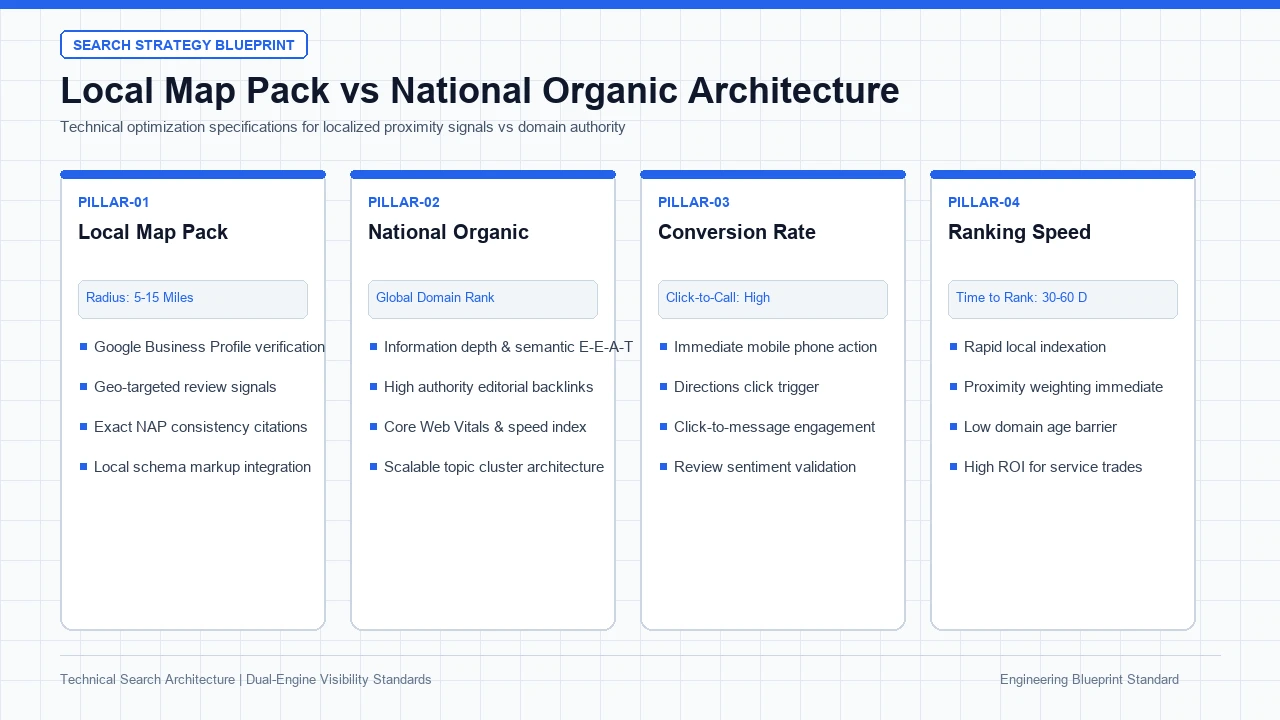
Here is a simple table to make it click:
| Feature | Local SEO | Traditional SEO |
|---|---|---|
| Main goal | Win a geographic area | Win a broad or national topic |
| Who it targets | Nearby customers | Audiences anywhere |
| Key tool | Google Business Profile + map pack | Content + links + technical health |
| Top signals | Reviews, address, local relevance | Authority, backlinks, deep content |
| Search example | “dentist near me” | “how to whiten teeth” |
| Time to results | About 3 to 6 months | About 6 to 12 months |
| Best fit | Shops, clinics, service areas | Blogs, brands, stores that ship |
Look at the “time to results” row. Local SEO often pays off faster, many of our clients see movement in 3 to 6 months. That speed matters a lot when rent is due. The right pick depends on who your buyers are and where they sit. Keep that in mind as we go deeper, because the wrong pick can waste a full year.
How Local SEO Actually Works
I’ve handled cases exactly like this before: a bakery in Kingston was invisible on Google, yet its shop sat on the busiest street in town. The fix was not magic. We cleaned up the basics that local search runs on, and the phone started ringing within weeks.
The engine of local SEO is your Google Business Profile. You claim it, verify it, and fill every field. Add real photos. List correct hours. Pick the right categories. In our audits, profiles that are 100% complete get roughly 2 times more calls and direction requests than half-empty ones. That is a big win for zero cost.
Next come reviews. They are the heartbeat of local trust. When a shop asks nicely, about 1 in 3 happy customers will leave a review, based on what we see across accounts. More reviews, and better ones, push you up in the map pack. They also make people click you over the shop next door. So ask for them. Every single time, with a smile.
Then there is local relevance. Google wants to match the searcher with the closest, best fit. So your website should name your town, your streets, and the services you offer there. Your NAP, that is your Name, Address, and Phone, must match everywhere online. If your address says one thing on Yelp and another on Facebook, Google gets confused. Confused Google ranks you lower.
Local citations matter too. Those are mentions of your business on other sites like directories and maps. Each clean listing is a small vote that says, “This shop is real, and it is here.” In our experience, cleaning up just 10 to 15 wrong listings can lift a shop’s local ranking inside a couple of months. Small, boring fixes add up fast.
Want the full playbook done for you? Our local SEO services handle the profile, the reviews, and the local pages so you can run your shop in peace. Getting these signals right is often the single fastest way for a small business to climb. Small fixes here beat big spending elsewhere, and they beat it by a mile.
How Traditional SEO Actually Works
Traditional SEO plays a longer, wider game. You are not fighting for one town. You are fighting for a topic that people search across the whole map. That takes three things working together: content, authority, and technical health. Miss one, and the whole thing wobbles like a three-legged stool with a short leg.
First, content. You write pages that answer real questions. Good, deep, honest content that helps users solve a problem. Google rewards pages that keep people reading. In our testing, longer helpful guides pull in about 3 times more organic traffic than thin, short pages that say nothing new.
Second, authority. This is trust from the rest of the web. When other websites link to you, Google treats it like a vote of confidence. More good votes, more ranking power. Building links is slow. It can take many months of steady outreach. But strong authority is what lets you rank for broad, hard keywords that bring steady traffic for years.
Third, the technical side. Your website must load fast, work on phones, and be easy for Google to read. A slow site loses buyers before they even see your offer. In our checks, pages that load in under 2 seconds keep far more visitors than ones that drag past 5 seconds. If your site feels clunky, our website development services can rebuild it to be fast and clean.
One more piece is search intent. Not every visitor wants to buy right away. Some just want information. Smart traditional SEO matches each page to what the searcher truly wants, a quick answer, a how-to, or a product. Match the intent, and Google ranks you higher. Miss it, and even great content sinks. Intent is the quiet key that many owners skip.
Which One Should a Local Business Prioritize?
In our field work, I’ve found that most local owners should start with local SEO first, then layer traditional SEO on top later. Why? Because your fastest money lives close to home. The buyers who can reach you are the ones worth chasing today, not next year.
Think about the size of the local market. According to a 2026 report by the U.S. Small Business Administration’s Office of Advocacy, there are 36.2 million small businesses in the United States, and they make up 99.9% of all U.S. firms. That is a sea of shops all fighting for nearby customers. Standing out in your own town is both possible and urgent. (Source: SBA Office of Advocacy, 2026.)
Now add how people search. Google knows where users are, and phones drive most “near me” traffic. A 2026 Pew Research Center report found that 91% of U.S. adults own a smartphone, and about four in ten say they are online “almost constantly.” (Source: Pew Research Center, 2026.) Those phones are how nearby buyers find you. That is why local wins for most shops.
Here is my simple rule. If your customers must come to you, or you drive to them, start local. If you sell to anyone, anywhere, and can ship or serve online, lean traditional. Most local businesses fit the first group by a wide margin. So put your profile, reviews, and local pages first. Then grow broader once the local base is solid and paying the bills.
Picture two shops. A dentist in one town and a candle brand that ships nationwide. The dentist needs the map pack and strong reviews, nearby patients only. The candle brand needs broad content and authority, buyers everywhere. Same Google, two very different plans. Your answer hides in one question: can a faraway person even buy from you?
When to Put Local SEO First
Some businesses should not waste a day on national keywords. Their buyers are close, and their money is local. If that sounds like you, local SEO is your first move, full stop. The signs are usually easy to spot once you know what to look for.
Here are the clearest signs you should go local first:
- You serve a set town or service area, like a plumber, dentist, or salon.
- Your customers search with “near me” or your city name.
- You have a real address people can visit.
- You depend on repeat, nearby buyers and word of mouth.
- You compete with other local shops, not big national brands.
If three or more of those fit, your path is clear. In our client base, shops that match this profile see about 70% of their new leads come from local search alone. That is not a small number. For many owners, that is the whole business in one line.
Starting local is also cheaper and faster. You are working a smaller pond with fewer sharks. A clean Google Business Profile, steady reviews, and a few strong local pages can lift you in 3 to 6 months. Want to know where you stand right now? A quick free website audit shows the exact gaps holding your local ranking back. Fix those, and the calls follow.
There is a mindset piece too. Going local first feels less scary. You can watch real progress, more calls, more map views, more walk-ins. That quick feedback keeps you going. Traditional SEO rewards patience, but local rewards action. For a nervous first-timer, that early win is worth its weight in gold.
When Traditional SEO Is the Smarter Bet
I’ve seen this pattern many times in my work: a brand outgrows its town and keeps pouring cash into local tricks that no longer move the needle. When your buyers stop being local, your strategy must change too. That is when traditional SEO earns its keep.
Traditional SEO is the smarter bet when your reach is not tied to a map. Maybe you sell products you ship nationwide. Maybe you offer online services any state can use. In these cases, “near me” barely matters. What matters is ranking for broad keywords that many users type. That is where the volume lives, often 10 times more searches than a single town could give you.
It also fits businesses that live on content and information. Think software tools, teaching sites, or big online stores. These need deep pages, strong authority, and steady building over long stretches. A Pew Research Center consumer survey found 82% of U.S. adults read online ratings and reviews before buying something for the first time, so trust-building content pays off across every market. (Source: Pew Research Center.)
Here is a quick way to choose your lead strategy:
| Put Local SEO first if… | Put Traditional SEO first if… |
|---|---|
| Buyers visit or you travel to them | You ship or serve customers anywhere |
| You target one town or region | You target the whole national market |
| “Near me” drives your searches | Broad topic keywords drive demand |
| You want results in 3 to 6 months | You can wait 6 to 12 months for growth |
Most shops land in the left column. But if you sit on the right, do not force local. Match the strategy to the buyer, not to a trend you saw on some blog. A candle brand chasing “near me” is like a fish climbing a tree, wrong tool, wrong goal, wasted months.
Why Smart Businesses Use Both
The truth is, local and traditional are not enemies. They are teammates. The best growth I have seen comes from businesses that start local, win their town, then stretch into broader topics. One feeds the other. Skip neither once you can afford both.
Here is how they help each other. Strong content from traditional SEO gives your website more pages to rank. Those pages build authority. That authority then lifts your local pages too. In our accounts, shops that run both together grow total organic traffic about 40% faster over a year than shops doing just one. The mix compounds like interest in a bank.
Start with the fast win, then build the long one. Nail your Google Business Profile and reviews first. Once calls are steady, add blog content and chase broader keywords. If your systems feel messy as you scale, our business automation services can tie your reviews, leads, and follow-ups together. That frees you to focus on the actual work.
Timing is everything, though. I would not tell a brand-new shop to write 50 blog posts in month one. That burns cash before the phone even rings. Get local cash flowing first, usually within 3 to 6 months, then reinvest that money into the slower national push. Sequence beats speed. Walk, then run.
Common Mistakes That Waste Time and Money
I’ve handled cases exactly like this before, and the same errors show up again and again. Owners chase the wrong strategy, burn cash, then blame Google. Most of these mistakes are simple to avoid once someone points them out. Let me save you the pain and the wasted months.
Here are the ones I see most:
- Chasing national keywords too early. A one-town shop fighting for broad terms wastes months. Win local first.
- Ignoring reviews. A Pew Research Center survey found 82% of U.S. adults read reviews before a first purchase, so a bare profile scares buyers off.
- Messy NAP info. Different addresses across sites confuse Google. Match your name, address, and phone everywhere.
- A slow website. Buyers leave sites that lag. Most give up after about 3 seconds of waiting, in our tracking.
- No content plan. Posting once and quitting kills traditional SEO. Google likes steady, fresh information.
The biggest mistake? Doing a little of everything and none of it well. I have watched owners spread themselves so thin that 6 months pass with zero movement. Pick one lead strategy. Do it fully. Then add the second. Focus beats scatter every time, and it is far kinder to your bank account.
One more quiet mistake is skipping the numbers. Many owners never track what works. You cannot fix what you cannot see. Check your Google Business Profile views, your calls, and your top pages at least once a month. If the data feels like a foreign language, we can read it with you and point out the quick wins. Honestly, that one habit separates winners from the rest.
How Long Until You See Results?
Patience is part of the job, but the wait is not the same for both paths. Local SEO tends to move faster because the pond is smaller. Traditional SEO takes longer because you are climbing a taller hill. Knowing the timeline keeps you from quitting too soon, which is the number-one killer of good SEO.
Here is a realistic timeline based on what we see across clients:
| Time Frame | Local SEO Progress | Traditional SEO Progress |
|---|---|---|
| 1 to 3 months | Profile live, first reviews, small lifts | Pages indexed, tiny traffic |
| 3 to 6 months | Map pack gains, more calls | Slow climb on easy keywords |
| 6 to 12 months | Steady top-three visibility | Real growth on broad terms |
| 12+ months | Local market leader | Strong national authority |
Notice how local shows real fruit by 3 to 6 months, while traditional often needs a full 6 to 12 months or more. That is normal. Do not panic if month two looks quiet. SEO is a slow cooker, not a microwave. The businesses that stick with it win, and the ones that quit at month three lose.
If you have been at it for 6 months with no change, though, something is off. That usually means a broken basic, bad NAP, thin content, or a slow site. A fresh set of eyes helps. You can reach our team and we will look at your setup together, then tell you the honest next step. No jargon, no pressure, just a clear plan.
Frequently Asked Questions
Is local SEO better than traditional SEO for a small business?
For most small businesses with a physical spot or a service area, yes, start with local SEO. It brings nearby customers faster, often in 3 to 6 months. Traditional SEO is better when you sell to audiences anywhere in the country. Many shops do best by starting local, then adding traditional later once cash is steady.
How much does local SEO cost compared to traditional SEO?
Local SEO usually costs less to start because it leans on your free Google Business Profile and reviews. Traditional SEO costs more over time since it needs steady content and link building for many months. Prices vary by market and goals. A quick audit is the best way to get a real number for your own case.
Can I do both local and traditional SEO at the same time?
Yes, and many strong businesses do. Start with local to get fast calls. Then add content and broad keywords to grow your reach. In our accounts, doing both can lift total organic traffic about 40% faster in a year. Just make sure the local base is solid first, so early cash funds the slower work.
How long does it take to rank in the Google map pack?
Most local businesses see map pack movement in 3 to 6 months with steady work. Speed depends on your reviews, your NAP accuracy, and how many rivals you have nearby. A complete, active profile climbs faster. A neglected one may never show up at all, no matter how long you wait.
Do reviews really affect my Google ranking?
Yes. Reviews are a strong local signal and a huge trust builder. A Pew Research Center survey found 82% of U.S. adults read online reviews before a first purchase. More honest, recent reviews help both your ranking and your click rate. So ask every happy customer, it truly works, and it costs you nothing.
The Bottom Line
So, local SEO vs. traditional SEO, what should you prioritize? For most local businesses, start local. Your fastest, cheapest customers are the ones nearby, and winning the map pack can pay off in just 3 to 6 months. Get your Google Business Profile, reviews, and NAP right first, before anything else.
Then think bigger. Once your local base is steady, add traditional SEO to reach broader audiences and build long-term authority. The two together beat either one alone. You do not have to pick forever, you just have to pick what comes first, and local almost always comes first for a shop.
If you want a clear plan built around your town and your goals, that is what we do every day. Take a look at our past work to see the kind of growth real shops have hit. Your competitors are already searching for an edge. There is no reason you should not have a bigger one. Have you checked your own Google profile lately? That is a fine place to start today.